Charting How Cluster Mechanics Influence Bonus Layering Across Licensed Mobile Platforms
Xander Vogel · Sep 19, 2026
Charting How Cluster Mechanics Influence Bonus Layering Across Licensed Mobile Platforms
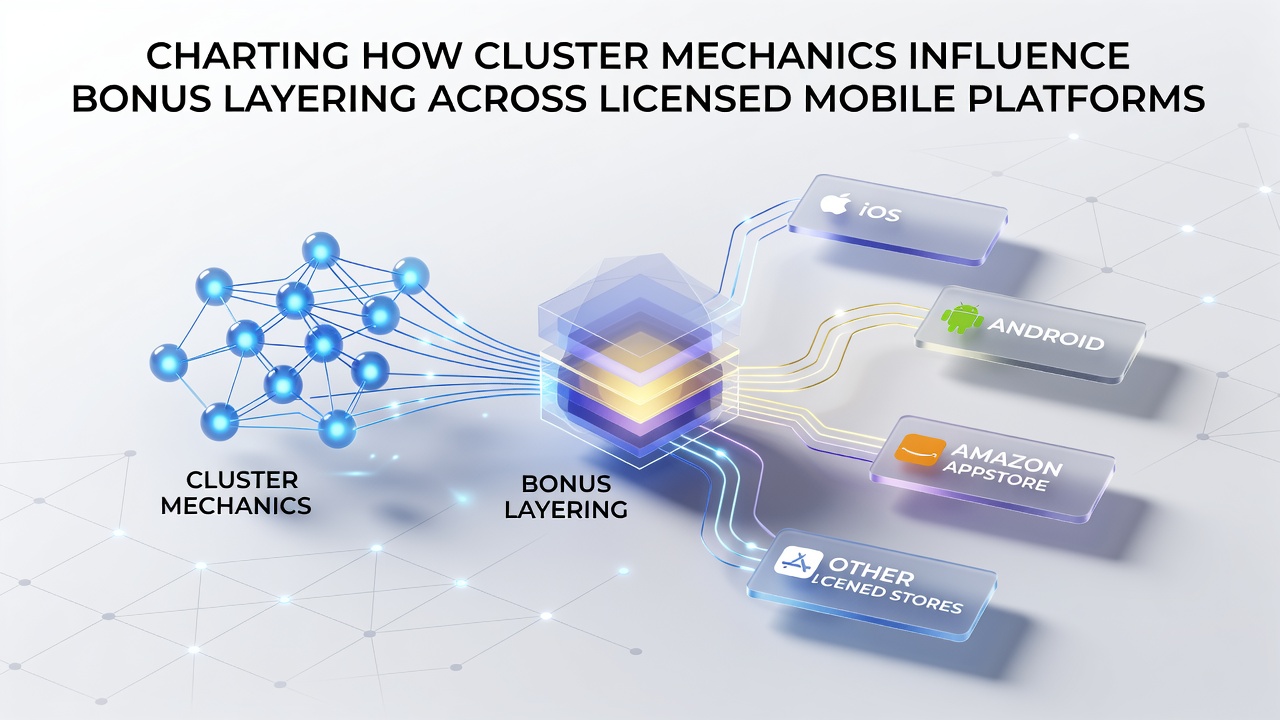
Cluster mechanics in licensed mobile slot platforms rely on adjacent symbol groups of five or more identical icons to generate wins instead of traditional paylines, and this formation process creates direct pathways for bonus features to stack sequentially during active spins. Observers note that providers program these clusters to expand dynamically when certain symbols land, which in turn triggers layered multipliers or additional free spin rounds that build upon the initial cluster size. Data from regulated markets indicates that such mechanics appear across multiple jurisdictions because they allow precise control over return-to-player calculations while maintaining compliance with platform-specific payout rules.
Core Elements of Cluster Formation and Their Extension Into Bonus Systems
Symbols form clusters through horizontal and vertical adjacency on the grid, and once a qualifying group registers a win those positions typically clear to allow new symbols to drop into place which extends the potential for chained events. Researchers have documented how this cascading effect integrates with bonus layers because each successive cluster can activate separate modifiers such as increasing multiplier values or unlocking persistent wild positions that remain active across multiple spins. Licensed operators in various regions enforce these interactions through certified random number generators to ensure outcomes remain independent yet structurally connected via the cluster ruleset.
Mobile Interface Adaptations and Layered Bonus Delivery
Touchscreen controls on mobile devices enable players to tap directly on forming clusters for visual confirmation, and developers have adapted bonus layering sequences so that animations scale smoothly without interrupting the flow of successive wins. Studies from academic gaming labs show that smaller screen real estate requires bonus indicators to appear in collapsible panels that expand only when cluster thresholds are met, thereby preserving visibility of the base grid while revealing layered rewards such as escalating jackpot contributions. Platforms licensed in North America and Europe incorporate these design choices to meet accessibility standards while preserving the mathematical integrity of the cluster-to-bonus progression.
Regulatory Data Points From September 2026
Figures released by the Alcohol and Gaming Commission of Ontario in September 2026 recorded a measurable rise in session duration on cluster-based titles compared with payline equivalents, attributing the difference to the layered bonus structures that activate after initial cluster wins. Similar patterns appear in reports from the Nevada Gaming Control Board, which tracked how mobile platforms handle concurrent bonus layers without exceeding prescribed volatility limits set by each license. These observations stem from aggregated transaction logs rather than individual player behavior, providing regulators with objective metrics on feature frequency and payout distribution.
Interaction Patterns Between Cluster Size Thresholds and Multiplier Accumulation
Minimum cluster sizes typically begin at five symbols, yet many titles raise this threshold during bonus rounds to intensify the layering effect, and data shows that each increase in required cluster size often pairs with higher multiplier caps that apply only after the base game cluster has already paid out. Providers calibrate these thresholds through iterative testing to balance hit frequency against the depth of bonus layers, ensuring that mobile sessions remain engaging without violating licensing caps on maximum exposure. Those who analyze payout tables across multiple operators find that cluster expansion mechanics frequently serve as the entry point for progressive jackpot contributions that accumulate independently of the primary bonus stack.
Cross-Platform Consistency in Licensed Environments
Licensed mobile platforms must deliver identical cluster and bonus outcomes whether accessed via native applications or browser sessions, and certification bodies verify this parity through repeated simulation runs that replicate thousands of spins under controlled conditions. Industry reports from the European Gaming and Betting Association highlight how cluster mechanics reduce the complexity of bonus layering code because the same adjacency algorithm governs both base game wins and feature triggers, which simplifies audit trails for regulators. Operators therefore maintain unified game engines that update cluster parameters across all licensed jurisdictions without introducing platform-specific deviations.
Conclusion
Cluster mechanics establish a foundation that directly governs how bonus layers accumulate and resolve on licensed mobile platforms, with regulatory data from September 2026 confirming consistent patterns in feature activation and session metrics across multiple markets. The structural relationship between cluster formation and layered rewards continues to shape development priorities for providers operating under diverse licensing frameworks, while interface adaptations ensure these interactions remain functional on mobile hardware. Continued analysis of transaction data from bodies such as the Nevada Gaming Control Board will supply further objective measurements of these dynamics as platforms evolve.