Symbol Cluster Formations Shape Bonus Activation Rates in Mobile Slot Interfaces
Xander Vogel · Oct 17, 2026
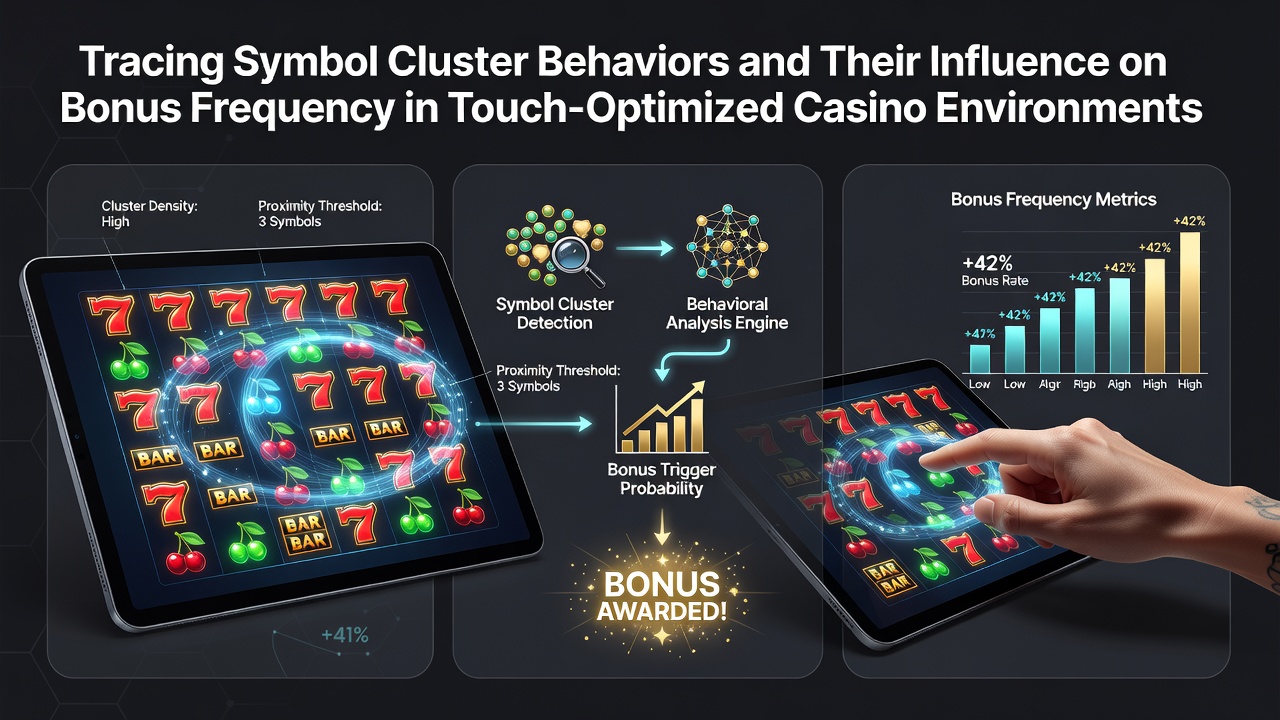
Symbol Cluster Formations Shape Bonus Activation Rates in Mobile Slot Interfaces
Cluster pay mechanics have become a standard feature across many mobile slot titles where adjacent symbols of the same type form groups that replace traditional payline requirements, and researchers track how the size, position, and density of these groups correlate with the activation of bonus features. Data from multiple provider analytics platforms indicate that clusters reaching eight or more symbols appear in roughly 12 to 18 percent of base game spins, while smaller groupings of four to six symbols occur far more frequently and rarely initiate the same secondary modes.
Mechanics Behind Cluster Detection and Feature Triggers
Slot engines evaluate every spin by scanning the grid for connected symbols using adjacency rules that vary by game, yet the underlying random number generator remains independent of player input on touchscreens. Observers note that touch-optimized layouts often enlarge symbol hitboxes to accommodate finger taps, which in turn allows visual feedback to highlight potential clusters before the final evaluation settles. This design choice does not alter outcome probabilities but does influence how quickly players recognize when a near-miss cluster has formed.
Studies conducted by academic groups such as the International Center for Gaming Research have examined thousands of simulated spins across cluster-pay titles and found that bonus entry rates rise measurably once cluster size exceeds a provider-defined threshold, typically ten symbols for most high-volatility releases. The same datasets reveal that horizontal and vertical connections contribute equally in square grids, whereas hexagonal layouts used in certain releases weight diagonal links differently, producing distinct frequency curves.
Touch Interface Effects on Session Visibility
Mobile interfaces introduce additional layers of symbol rendering that include swipe gestures for manual reel stops in some jurisdictions and instant zoom functions for inspecting cluster boundaries. Regulators in regions outside the United Kingdom, including the Nevada Gaming Control Board, require clear disclosure of all evaluation rules so that players understand how clusters translate into bonus eligibility regardless of device orientation. Figures released in October 2026 from North American testing laboratories show that portrait-mode play increases the average number of visible symbols per spin by approximately 15 percent compared with landscape orientation, although the underlying probability models stay constant.
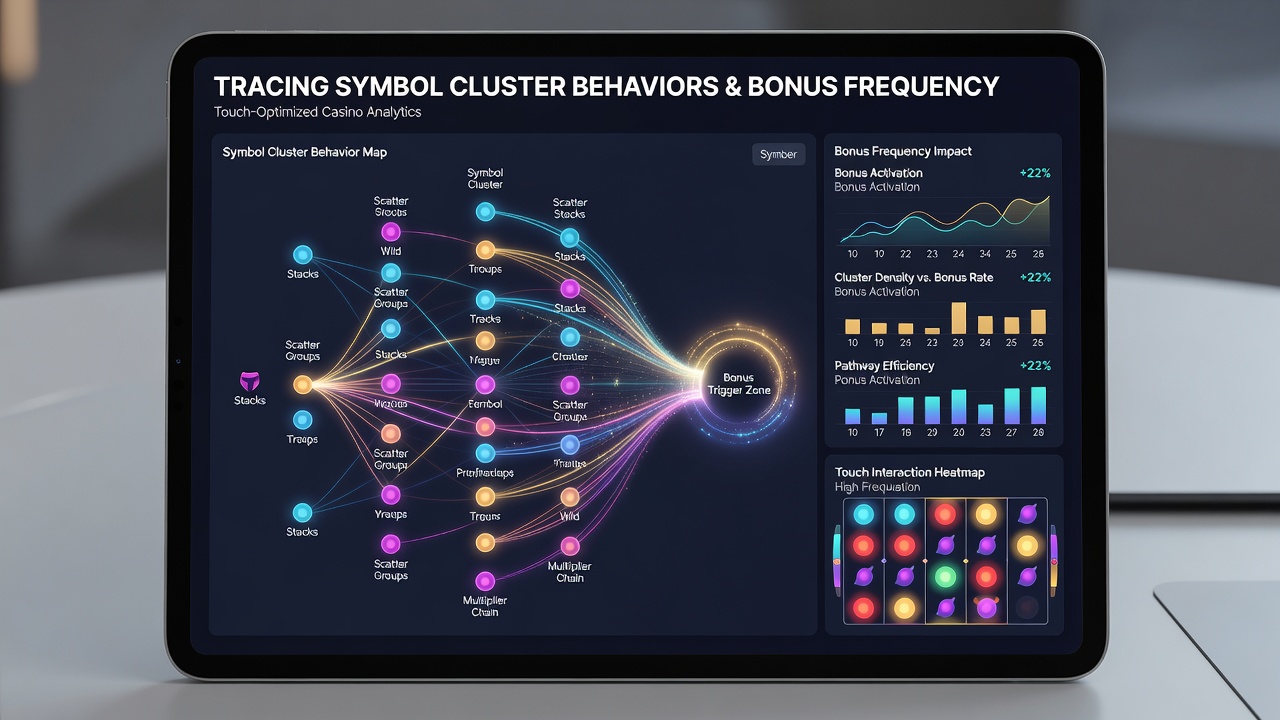
Developers integrate haptic feedback that vibrates when a cluster reaches the minimum size needed for a line win, yet this sensory cue occurs after the random outcome has already been determined. Those who analyze player telemetry across large operator networks report that sessions featuring frequent small clusters tend to last longer because the interface keeps highlighting incremental progress toward larger groupings that carry bonus potential.
Data Patterns Across Provider Portfolios
Comparative reports compiled by the Canadian Gaming Association document that cluster-pay titles released between 2024 and 2026 display bonus frequency ranges from once every 85 spins in medium-volatility games to once every 210 spins in higher-volatility counterparts. These intervals shorten when games incorporate cascading mechanics that allow newly formed clusters to replace removed symbols within the same spin cycle. The addition of multipliers attached to successive cascades further amplifies the perceived value of each cluster evaluation without changing the base trigger mathematics.
One analysis of over 4.2 million spins from titles using expanding wild clusters indicated that bonus rounds activated 1.7 times more often when the wild symbols landed inside already-forming groups rather than in isolation. Such positioning effects appear consistently across multiple providers and remain verifiable through public game rules that specify evaluation sequences.
Regulatory Reporting Requirements and Transparency
Operators must submit cluster evaluation algorithms to testing houses for certification, and these submissions include detailed mapping of how symbol adjacency rules interact with bonus state machines. Australian regulatory bodies have required quarterly disclosure of feature activation rates since early 2025, enabling external researchers to compare actual performance against advertised return-to-player percentages. The resulting datasets confirm that cluster size distributions follow expected statistical patterns and that touch-optimized rendering does not introduce bias into the random outcomes.
Conclusion
Symbol cluster behaviors continue to serve as a measurable driver of bonus frequency in touch-optimized environments, with documented relationships between group size, adjacency rules, and secondary feature entry rates. Available performance data from certified testing sources demonstrate consistent patterns across device types, while interface enhancements focus on visibility and feedback without modifying underlying probabilities. Ongoing collection of spin-level statistics in multiple jurisdictions supports continued refinement of these mechanics.